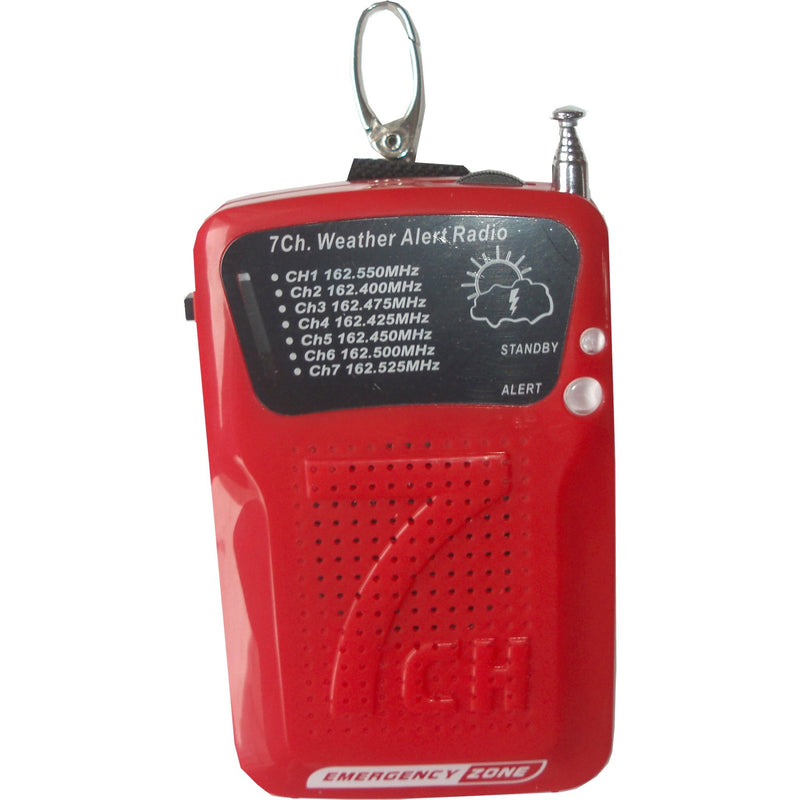
Information is Survival In the immediate aftermath of a disaster—whether it’s a hurricane, tornado, or massive power outage—cell towers often fail and internet access vanishes. The Weather Alert Radio ensures you are never cut off from critical information. This dedicated receiver taps directly into the National Weather Service's (NWS) NOAA Weather Radio network, providing a continuous 24-hour stream of up-to-date forecasts, current conditions, and life-saving hazard messages. It is your direct link to official government broadcasts, allowing you to make informed decisions when situational awareness is the difference between safety and danger.
Key Features
- Direct NOAA Access: Receives broadcasts from the "Voice of the National Weather Service," bypassing commercial radio to give you unfiltered, official data.
- 7-Channel Tuning: Pre-programmed with the 7 standard narrowband frequencies (162.400 - 162.550 MHz) used across the United States, ensuring coverage wherever a NOAA signal is available.
- 24/7 Coverage: The network broadcasts continuously, offering routine forecasts during calm weather and breaking alerts during emergencies.
- Severe Weather Warnings: Provides immediate notification of severe weather watches (conditions are favorable) and warnings (imminent threat) for your area.
- Compact Portability: Designed to fit easily into emergency kits, glove boxes, or bug-out bags, ensuring you have intel on the go.
Why It Matters "Knowing what is going on" is the first step in survival. While your smartphone battery dies in a day and relies on fragile infrastructure, radio waves are robust. This radio allows you to track the path of a storm, hear evacuation orders, or monitor flood levels even when the power is out and the Wi-Fi is down.
How to Use & Problem Solving This radio is designed for simplicity during high-stress moments.
- Power Up: Insert fresh batteries (check specific model for size) and turn the unit on.
- Tune: Cycle through the 7 Channels (listed below) until you find the clearest signal. Different regions use different frequencies, so the "best" channel changes if you travel.
- Listen: Leave the radio on during severe weather events to receive real-time updates from the NWS.
- Verify: Visit the NWR Station Listing directory online (before the disaster) to know which frequency serves your county.
Technical Overview The radio receives the following 7 NOAA frequencies:
- Channel 1: 162.550 MHz
- Channel 2: 162.400 MHz
- Channel 3: 162.475 MHz
- Channel 4: 162.425 MHz
- Channel 5: 162.450 MHz
- Channel 6: 162.500 MHz
- Channel 7: 162.525 MHz