Skip to content
Veteran-Owned & Operated – Free Shipping on Orders over $100
Veteran-Owned & Operated – Free Shipping over $100

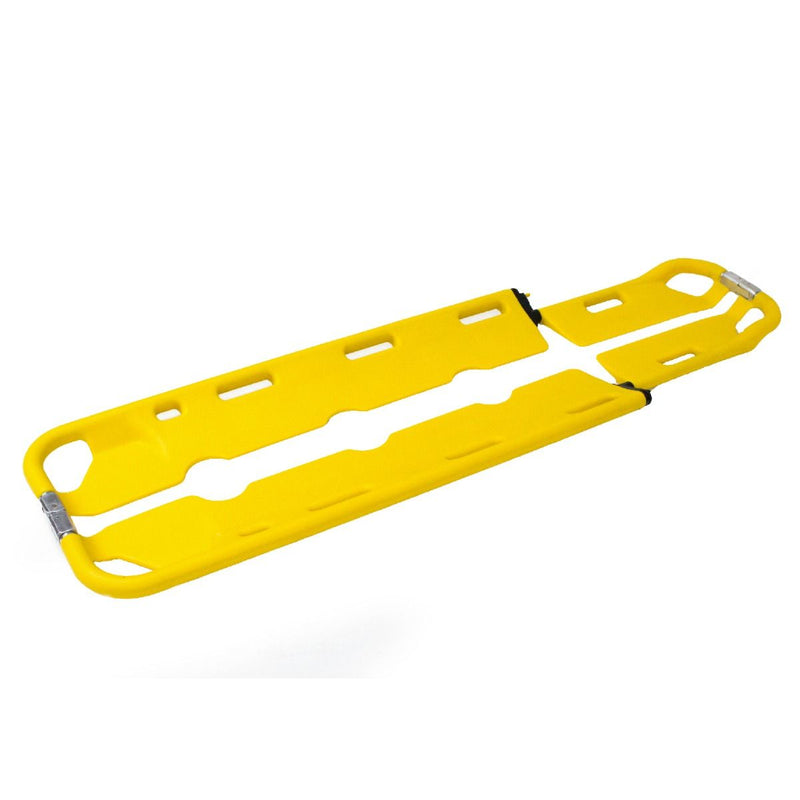
Kemp USA Yellow Scoop Stretcher – Separable Plastic Immobilization Device

Original price $500.00 - Original price $500.00
Original price $500.00
$514.80
$514.80 - $514.80
Current price $514.80
SKU 10-988-YEL
Availability:
in stock, ready to be shipped

Lift Without the Roll: Superior Trauma Protection The Kemp USA Yellow Scoop Stretcher addresses one of the most critical challenges in pre-hospital care: moving a patient without exacerbating spinal or pelvic injuries. Unlike a standard backboard that requires the patient to be "log-rolled" onto the device—a maneuver that can cause pain or worsen fractures—the Scoop Stretcher utilizes a Two-Piece Separable Design.

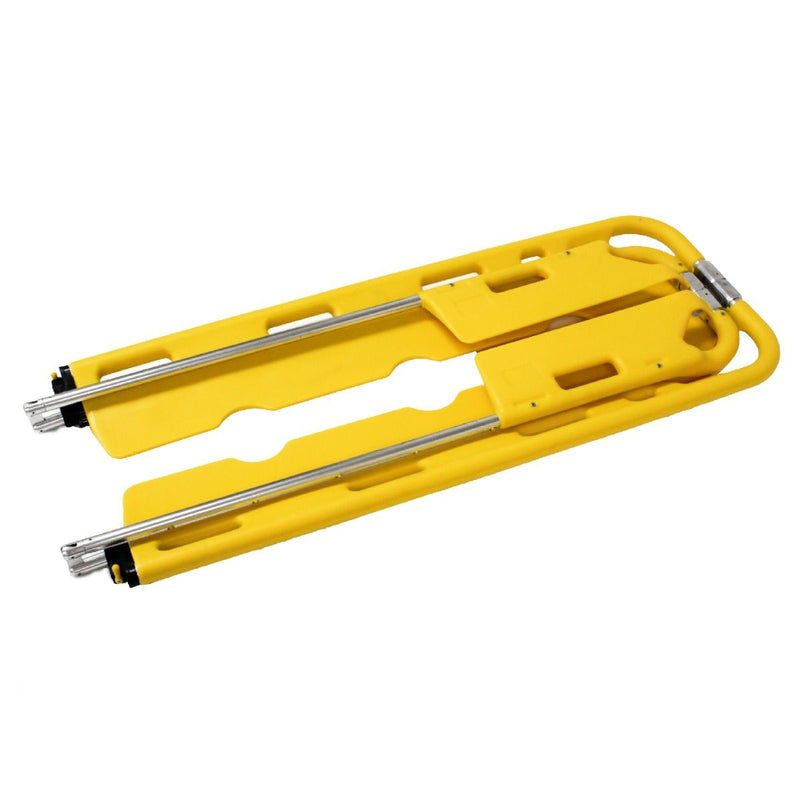
The stretcher uncouples at both ends, splitting into two halves. These halves are gently slid under the patient from the sides and re-locked, essentially "scooping" the patient up from the ground. Constructed from High-Impact Plastic, this stretcher is rigid, durable, and easy to clean. It provides a thermally comfortable surface for the patient (unlike cold aluminum scoops) while maintaining the structural integrity needed for safe transport.

Key Features

  • Separable "Clamshell" Design: The vertical split allows rescuers to position the stretcher under the patient without lifting or rolling them, significantly reducing spinal manipulation.
  • Spinal & Pelvic Safety: By eliminating the need for a log roll, this device is the Gold Standard for moving patients with suspected pelvic fractures or severe spinal trauma.
  • Heavy-Duty Plastic Construction: Made from durable, lightweight plastic that is easy to sanitize, resists bending, and does not conduct heat or cold like metal stretchers.
  • Secure Transport: Comes equipped with Patient Restraint Straps to secure the patient to the device immediately upon lifting.
  • Center Open Center: The open-center design permits X-rays and clear visualization of the spine (depending on specific imaging protocols) and prevents pooling of fluids.

Why It Matters For decades, the "log roll" was the standard. However, modern trauma protocols recognize that rolling a patient with a shattered pelvis can be fatal. The Scoop Stretcher allows for a "lift and slide" technique that keeps the patient in a neutral position. It is an essential tool for geriatric falls (hip fractures) and high-impact trauma scenes.

Technical Overview Dimensions: 75” L x 18” W x 2.5” H. Weight: 20 lbs. Capacity: 350 lbs. Material: Heavy-Duty Plastic. Color: Yellow.

  • Pelvic Fractures: Avoids the dangerous compression of a log roll.
  • Hip Injuries: Reduces pain during movement for geriatric patients.
  • Spinal Precautions: Minimizes lateral movement of the spine.
  • Confined Spaces: Can be slid under a patient in tight quarters.
  • Athletic Training: Moving injured players off the field safely.
  • Dimensions: 75” L x 18” W x 2.5” H (190.5cm x 46cm x 6.4cm)
  • Weight: 20 lbs
  • Load Capacity: 350 lbs
  • Material: High-Impact Plastic
  • Color: High-Visibility Yellow
  • Mechanism: Dual-End Safety Locks
📖 Official Resource
Step-by-Step Field Manual
Learn how to properly deploy and stage this equipment in a crisis.

Frequently Asked Questions

Why does the Kemp USA Yellow Scoop Stretcher use a two-piece separable design instead of a solid board?

The two-piece separable design allows EMS teams and paramedics to slide each vertical section under a patient without rolling or lifting them, which is critical when spinal cord injuries are suspected. Unlike traditional backboards that require log-rolling the patient, the Kemp USA scoop stretcher splits apart, slides underneath from both sides, then reconnects securely. This minimizes spinal movement during transfer, reducing the risk of exacerbating trauma. The design is particularly valuable in confined spaces like vehicle extrications or narrow hallways where traditional lifting techniques aren't feasible.

Can the Kemp USA Yellow Scoop Stretcher handle bariatric patients in emergency situations?

The Kemp USA Yellow Scoop Stretcher supports up to 350 lbs, making it suitable for many adult patients but not specifically rated for bariatric use. For patients exceeding 350 lbs, you'll need a bariatric-rated scoop stretcher or alternative transfer device. The heavy-duty plastic construction provides excellent durability for standard emergency transport, and at only 20 lbs, it remains lightweight enough for rapid deployment by a two-person rescue team while maintaining structural integrity under load.

How does the 75" length of the Kemp USA scoop stretcher compare to standard ambulance cot compatibility?

At 75 inches long and 18 inches wide, the Kemp USA Yellow Scoop Stretcher is designed to fit standard ambulance cots and transfer directly onto hospital gurneys without removing the patient. The compact 2.5-inch height profile allows it to slide easily under patients in tight spaces, and the dimensions align with NFPA 1917 ambulance equipment standards. This means you can secure the entire scoop stretcher assembly to your cot using standard straps, maintaining spinal immobilization throughout transport from scene to emergency department.

What makes the yellow color of this Kemp USA scoop stretcher important for rescue operations?

The high-visibility yellow color of the Kemp USA scoop stretcher serves a critical safety function in low-light rescue environments, nighttime operations, and mass casualty incidents. Yellow equipment is easier to locate in cluttered trauma scenes, vehicle wreckage, or outdoor rescue settings. It also provides instant visual identification for triage teams managing multiple patients, helping coordinate equipment allocation during multi-agency responses. The color choice aligns with ANSI safety standards for emergency medical equipment visibility.

Does the Kemp USA Yellow Scoop Stretcher include patient restraints, or do I need to purchase them separately?

The Kemp USA Yellow Scoop Stretcher includes secure patient restraints as part of the complete system, ensuring the patient remains stabilized during transport without additional purchases. These integrated restraints work in conjunction with the two-piece locking mechanism to prevent patient movement once the stretcher halves are reconnected. For optimal spinal immobilization protocols, many EMS teams supplement the included restraints with head blocks and additional strapping, but the base restraint system meets standard patient transfer requirements for suspected spinal injuries.